Architecture
Overview
The CE-RISE Hex Core Service follows a strict hexagonal (ports and adapters) architecture.
The domain and use-case logic in crates/core has no knowledge of HTTP, databases, or any
specific IO provider. All external interactions are mediated through port traits.
Architecture Views
Digital Passport Interaction View
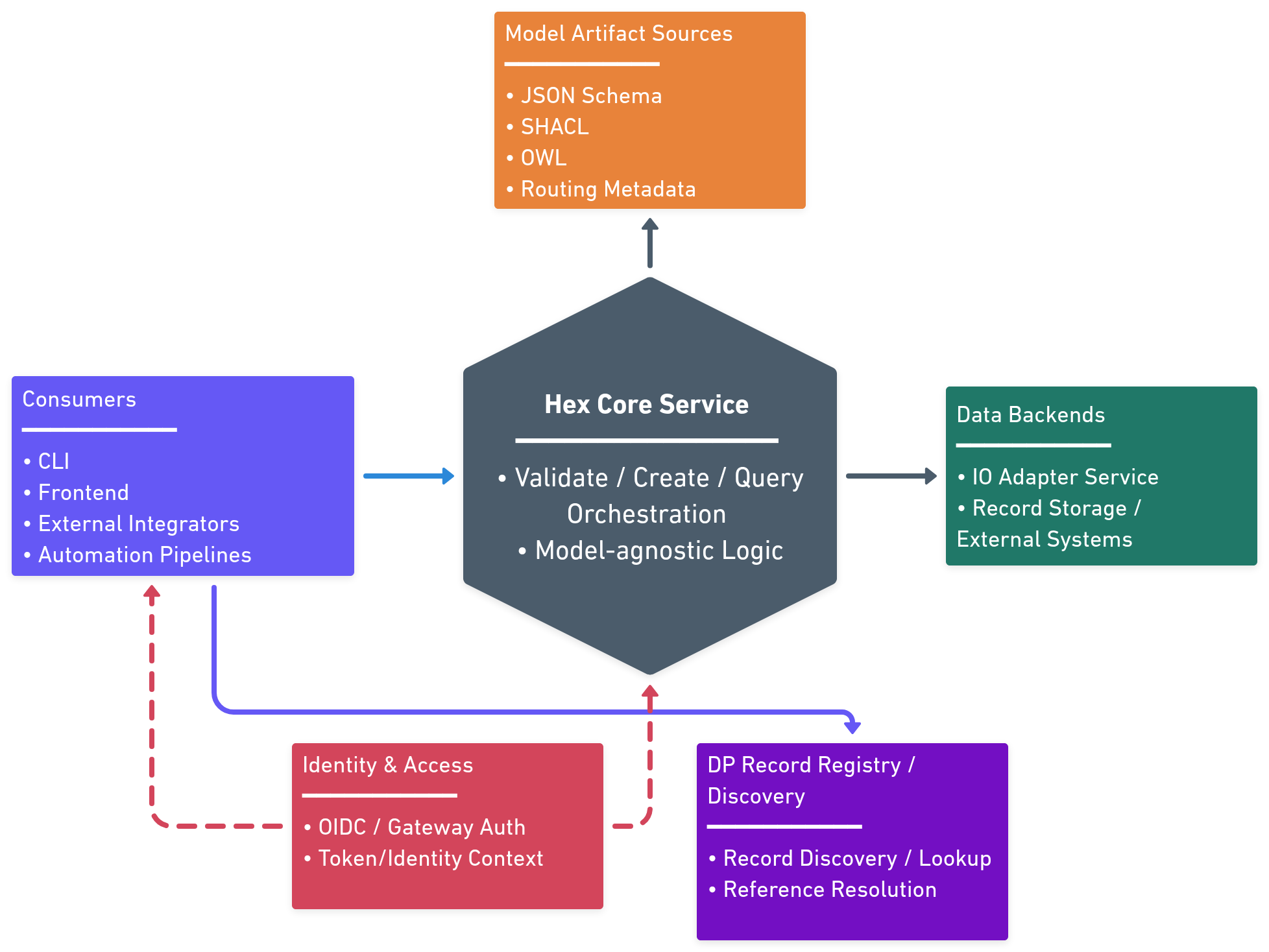
Digital Passport interaction flow showing both external consumption and internal processing: clients submit/query records, the core resolves model artifacts from registry/catalog sources, validates payloads, and reads/writes through configured backend adapters.
Deployment View
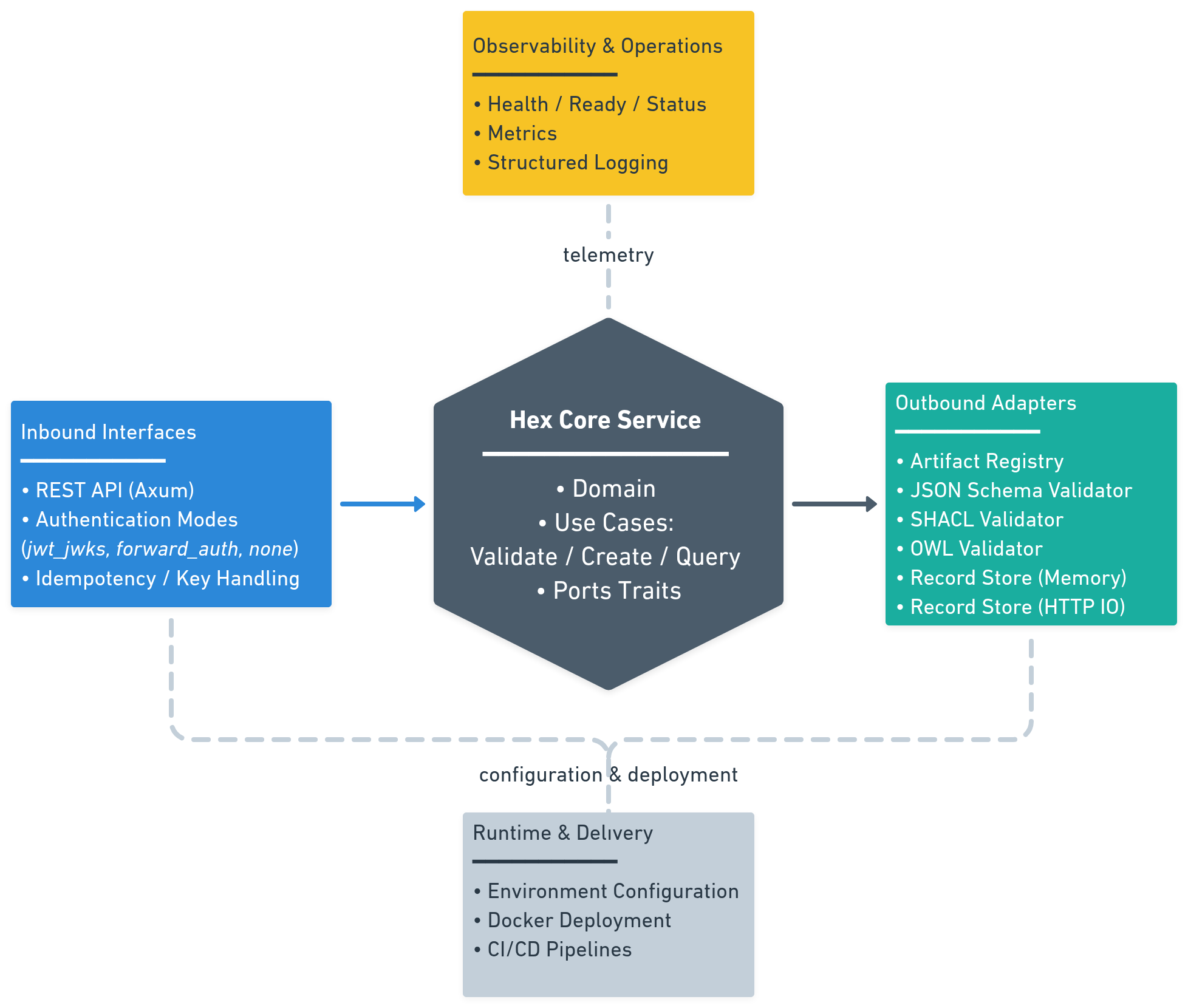
Deployment-oriented architecture view of the hex-core service, showing inbound interfaces, core orchestration, outbound adapters, and runtime dependencies in one deployable unit.
The hexagonal architecture pattern used in this service is also illustrated in the following diagram:
                    ┌──────────────────────────────────────┐
                    │           INBOUND ADAPTERS           │
                    │  REST API (axum)  │  CLI  │  Tests   │
                    └──────────┬──────────────────────────-┘
                               │  calls inbound port traits
                    ┌──────────▼───────────────────────────-┐
                    │             CORE (crate)              │
                    │  ┌────────────────────────────────┐   │
                    │  │   Use Cases (implementations)  │   │
                    │  │  ValidateUseCase               │   │
                    │  │  RecordUseCase                 │   │
                    │  │  EnrichUseCase (opt.)          │   │
                    │  └────────────┬───────────────────┘   │
                    │               │  calls outbound port traits
                    └──────────────-│─────────────────────--┘
                                    │
              ┌─────────────────────┼──────────────────────┐
              │                     │                      │
   ┌──────────▼──────┐  ┌───────────▼──────┐  ┌────────────▼──────┐
   │ ArtifactRegistry│  │  ValidatorPort   │  │  RecordStorePort  │
   │ (catalog + URL  │  │  (SHACL / JSON   │  │  (HTTP IO adapter │
   │   fetch helper) │  │   Schema / OWL)  │  │   memory / db)    │
   └─────────────────┘  └──────────────────┘  └───────────────────┘
Layer dependency rules
The architecture enforces strict dependency constraints to maintain separation of concerns:
| Layer | Allowed dependencies | Forbidden |
|---|---|---|
core/domain | std, serde, thiserror | Everything else |
core/ports | core/domain, async-trait | Any I/O |
core/usecases | core/domain, core/ports | Any I/O, HTTP, DB |
registry | core/ports, reqwest, tokio | core/usecases |
api | core/ports, axum, tower, jsonwebtoken | Direct DB/IO |
validator-* | core/ports, validator-specific libs | HTTP, DB |
io-* | core/ports, adapter-specific libs | Core use cases |
These rules ensure that:
- The core domain remains pure and testable
- Business logic has no coupling to infrastructure
- Adapters can be swapped without affecting the core
- Dependencies flow inward toward the domain
Layers
- Domain (
crates/core/src/domain) — entities, value objects, error types. No I/O. - Ports (
crates/core/src/ports) — inbound use-case traits and outbound adapter traits. - Use cases (
crates/core/src/usecases) — orchestration logic implementing inbound ports. - Registry (
crates/registry) — catalog-backedArtifactRegistryPortwith URL artifact fetching. - REST adapter (
crates/api) — axum HTTP server implementing the inbound interface. - IO adapters (
crates/io-memory,crates/io-http) —RecordStorePortimplementations. - Validators (
crates/validator-jsonschema,crates/validator-shacl) —ValidatorPortimplementations.
Key design decisions
Use-case error behavior (implemented)
ValidateUseCaseImplpropagates validator execution failures as domain errors.RecordUseCaseImplblocks writes when merged validation report fails.RecordUseCaseImplalso propagates validator execution failures (they are not ignored).